
Teaching Kids About Money on Vacation
Teaching kids about money on vacation is a great way to prepare them for a responsible and thriving financial future. They’ll learn that managing your finances doesn’t have to be scary– in fact, it can actually be fun!

One of Donnie and my goals as parents is to teach our two sons responsibility with money before they leave our home.
We want them to feel prepared to navigate their finances on their own so they can make smart decisions from the get go and put themselves in a healthy financial position.
As such, we have tried to weave in money lessons and teaching moments as they’ve grown up so that they can gain experience and have a realistic view of what successfully managing your finances entails.

One of the boys’ favorite ways we have done this is to put them in charge of tracking the budget while we’re on vacation.
Teaching Kids Financial Responsibility on Vacation: The Setup
Through out the year, our family saves for our summer vacation using sinking funds.

In a nutshell, this means that we set aside a little bit of money each week so that when vacation rolls around, we’ve already saved enough to cover it so we don’t have to go into debt.
This also means that we know exactly how much we have to spend during our vacation if we don’t want to exceed the amount we have saved.
Before we leave, I create spending categories for our trip and assign a budget amount for each one. Our vacation spending categories usually include:
- Accommodations
- Transportation
- Food
- Activities
- Souvenirs
Depending on where we’re headed, we may have additional categories, but those are the basics I use for almost every vacation.
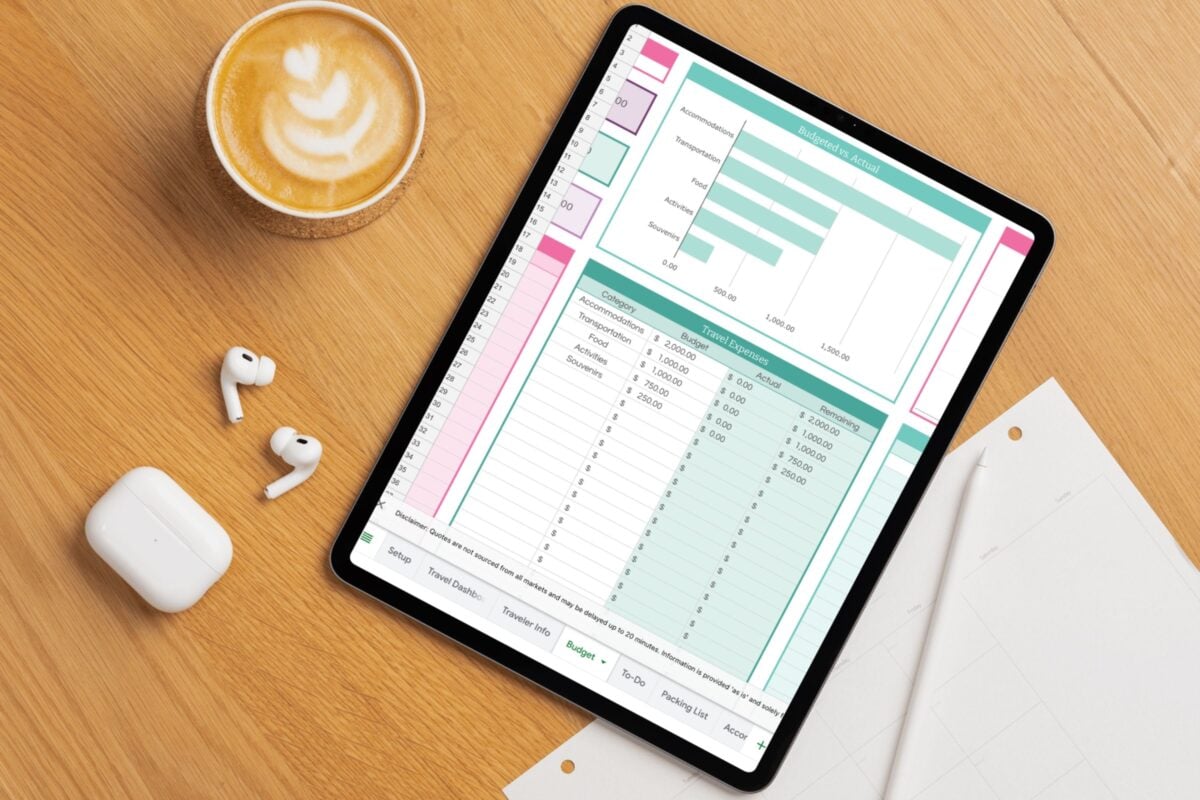
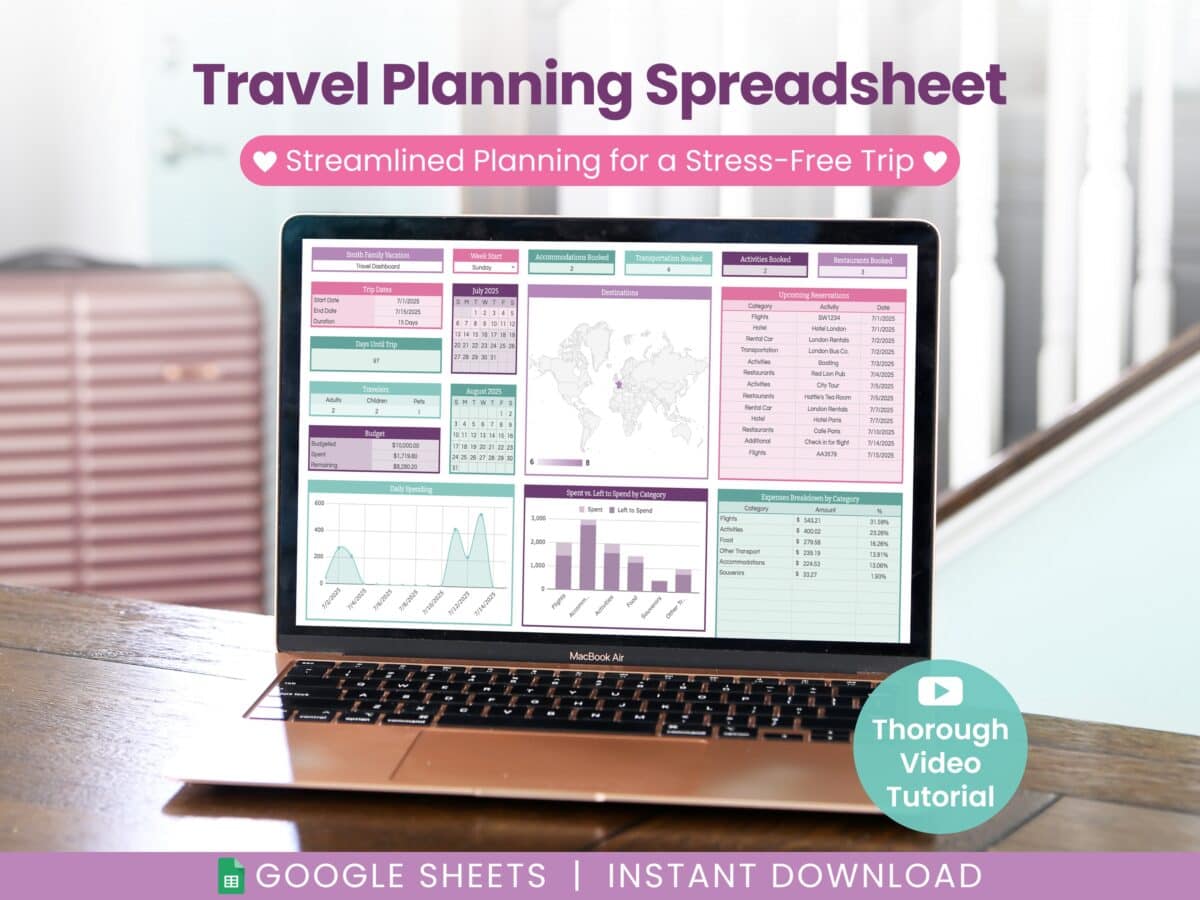
We currently use the budget tab in this Travel & Vacation Planning Spreadsheet to track spending on our trip.
After I get the initial budget categories and amounts set up, the kids take over.
Tracking the Vacation Budget to Teach Kids About Money
Every time we make a purchase while we’re traveling, it is the boys’ job to enter the transaction into our shared spreadsheet.
Since the sheet we use is in Google Sheets, everyone in our family has access to it and can easily update it using the Google Sheets app on their phone, tablet, or computer.
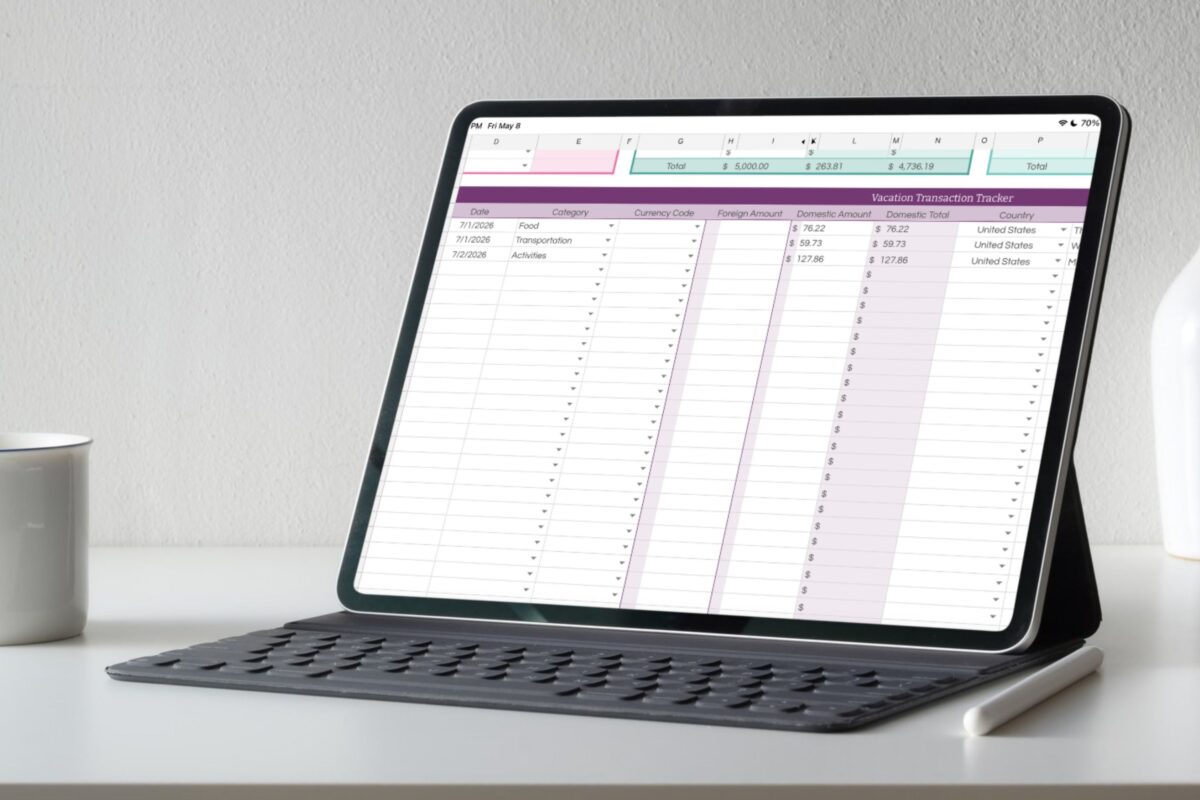
The kids take turns entering our purchases into the transaction log. And since the sheet does the math and automatically tells them how much we’ve spent and how much we have left to spend in each category, they love to report how we’re doing throughout the trip.
They will often look at the amounts we have left and say things like, “Okay, we can spend $X each day from now on and still stay under budget!”

As we get closer to the end of the trip and our “left to spend” numbers get smaller and smaller, they become especially aware of where our money is going because it feels like a fun game to them to try to stay under our goal numbers.
Donnie once bought a $6 container of cheese at a gas station that the boys deemed too expensive, and they didn’t let him forget it (all in good fun!) the entire trip! 😂
Teaching Kids About Money on Vacation: Why We Love This Strategy
This strategy has been great for our family for so many reasons!
Mastering Budgeting Basics
First, it is a low-key way to teach kids about tracking their spending and maintaining a budget.
These are great habits and skills for the boys to have moving into adulthood. No matter how much money they end up making, we want them to have confidence that they are stewarding it wisely. Making a budget plan and tracking as they execute it is a fantastic way to do that.

We’re framing budgeting not as a tedious chore that is a punishment when money is tight, but as a positive and responsible action they can take to improve their financial picture at any income level.
Maintaining a Positive and Realistic View of Money
Having the boys track our vacation spending also teaches them that even though money is finite, it doesn’t have to be stressful.
Tracking our spending on vacation doesn’t feel like a burden to them– they actually have fun doing it and make a game of trying to stay under budget!
And if an unexpected expense pops up and we go over budget in a certain category, we can discuss how to move money around from other categories so we can still make it work.
Encouraging Smart Decision Making
On vacation, as in life, we often can’t get everything we want.
We are sure to pack in plenty of fun on our trips, but tracking our spending often means we have to decide between various excursions or choose our souvenirs wisely, and we love that the boys play a role in those decisions.
These financial decisions are easier than the ones they’ll make as adults, but it gets them started with thinking critically about money. And they get used to saying “no” to things in order to meet their financial goals.

I could go on and on! But the benefits from this simple exercise have taught the boys so many important lessons and will help set them up for financial success well into the future.
Grab the Travel & Vacation Planning Spreadsheet
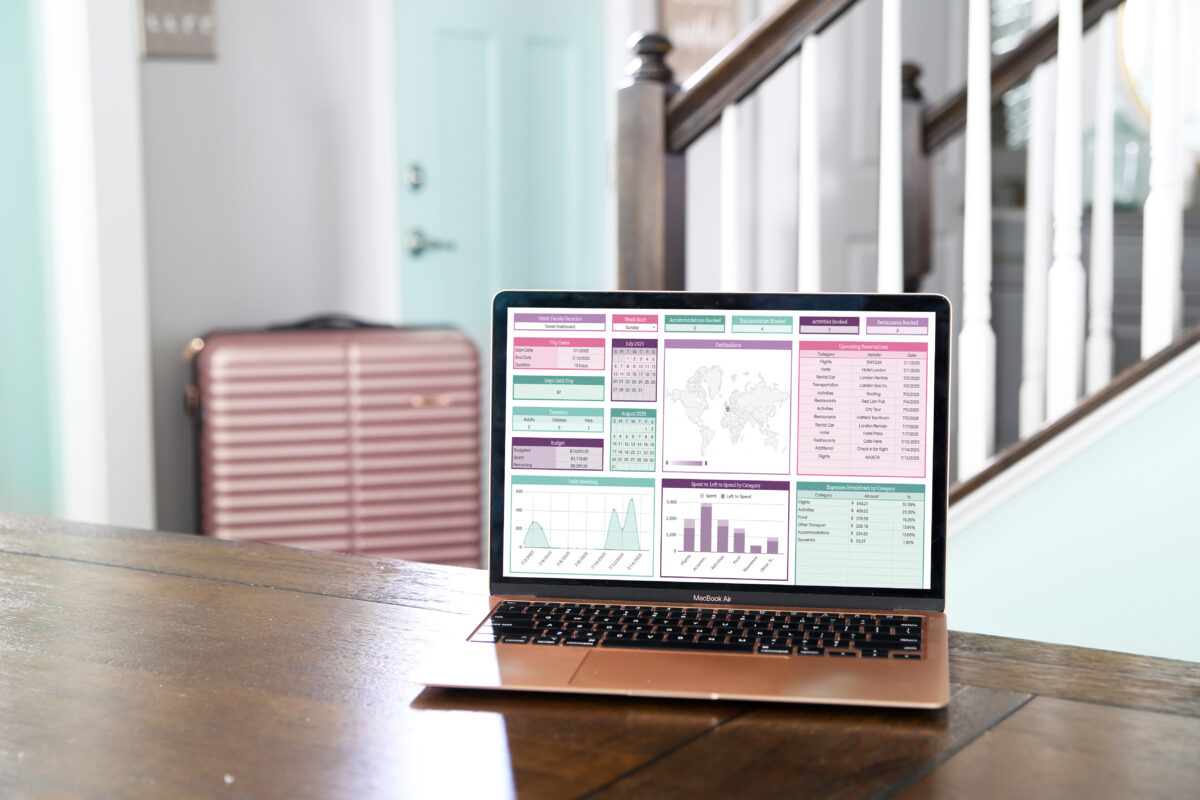
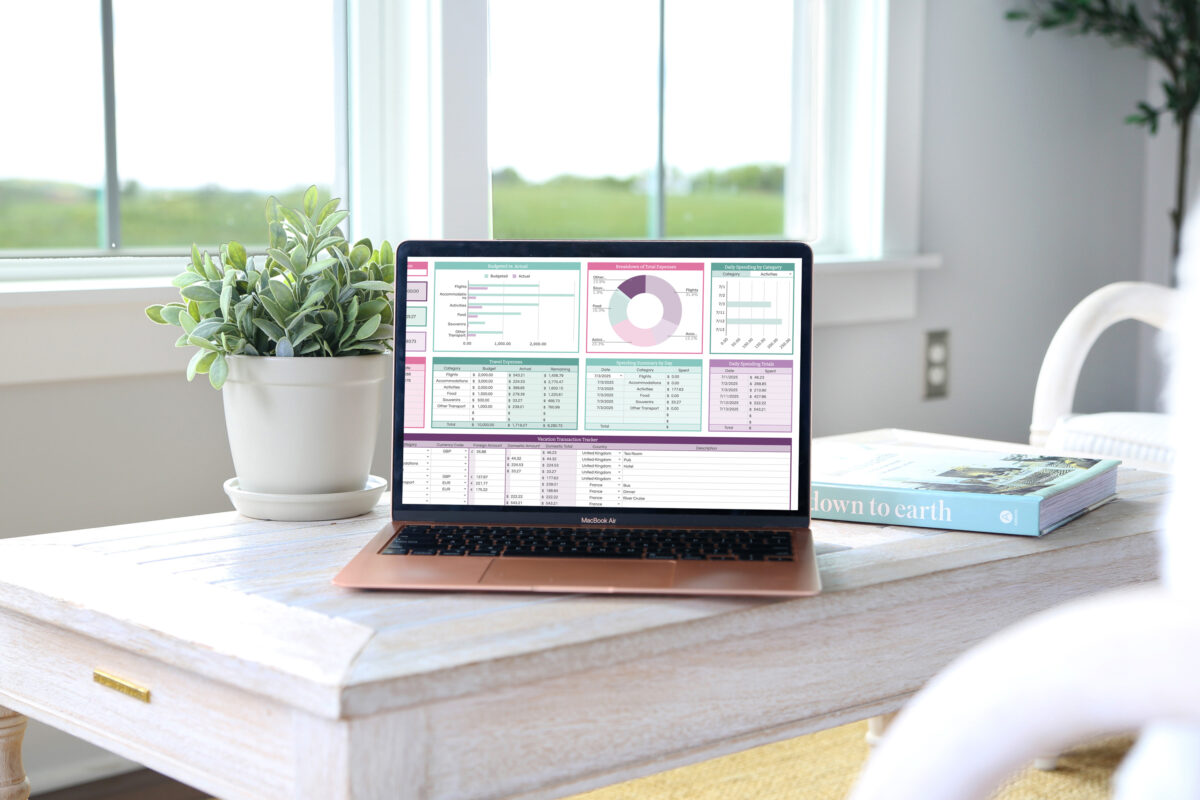
If you’d like use this strategy with your kids on your next vacation, you can grab the Travel & Vacation Planning Spreadsheet we use right here.
(Or if you want to help them track their own day-to-day spending instead, this simple Monthly Budget Spreadsheet is the perfect place to start.)
Teaching Kids About Money on Vacation: Final Thoughts
It’s funny that even though kids spend thousands of hours in school, they don’t often emerge with a ton of knowledge about successfully managing their finances!
As parents, we wanted to make sure we closed that gap so that our boys can start building a healthy financial future from the beginning. Having them involved with the vacation finances is just one small easy and fun way to do that.

Teaching Kids About Money on Vacation: Frequently Asked Questions
Want to save this post to revisit later? Be sure to pin the image below so you can find it easily!

More Posts About Organizing Your Finances
Thank you so much for following along! Have a wonderful day!