
How to Budget with Biweekly Paychecks (with FREE Spreadsheet Template)
Learn how to budget with biweekly paychecks. Snag our free biweekly pay budget template to help you figure out the best way to organize your spending!
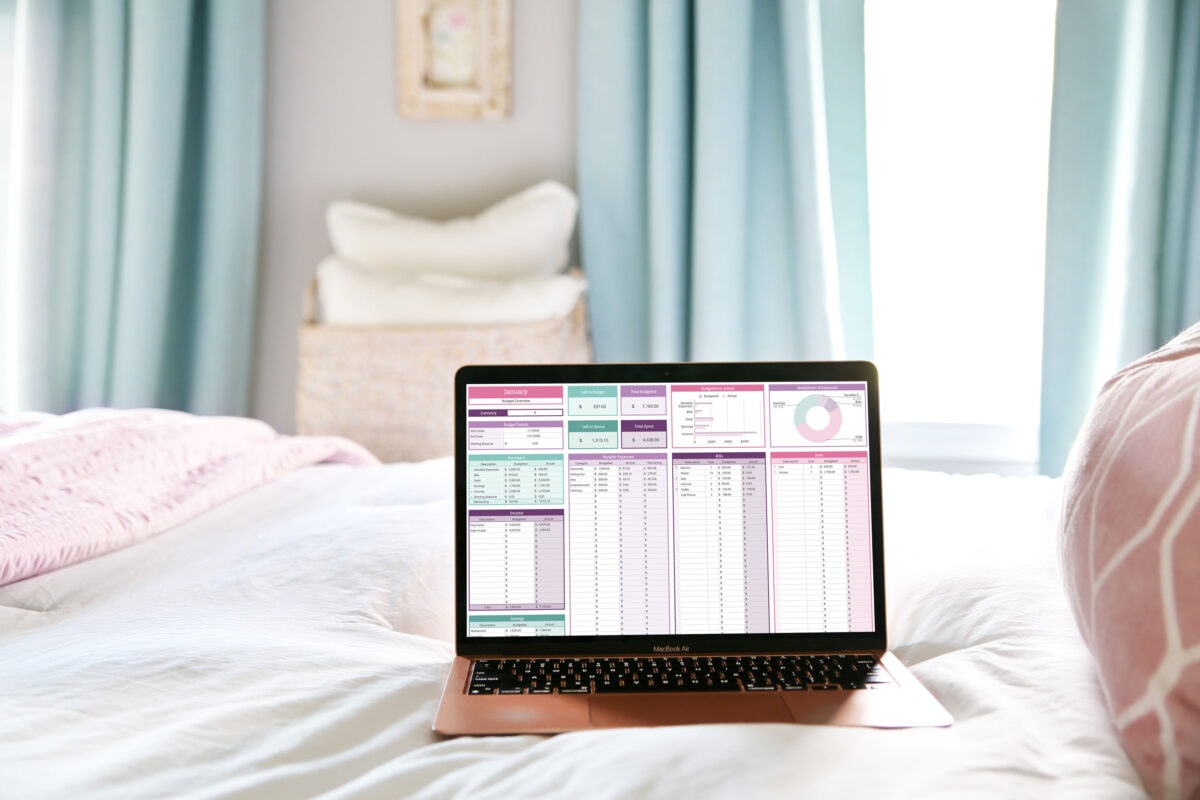
It doesn’t take much for us to give up on budgeting. If it feels daunting or overly complicated, we’re more likely to throw in the towel, even though we know tracking our spending could help us drastically improve our finances.
One of the biggest roadblocks I’ve seen people face when building a budget is figuring out how to get all of their monthly bills organized into their biweekly pay schedule.
Because I don’t want biweekly paychecks to keep you from succeeding with your budget, today I’m going to give you a simple process to follow so that biweekly budgeting feels a whole lot easier!
(I have a free biweekly bill calculator template that will help with the math too. Be sure to snag it later in the post!)
What is a biweekly budget?
With a biweekly budget, you get paid every two weeks, giving you 26 paychecks per year.
Since paydays can vary from month to month, and pay periods can span parts of two different months, it takes a little bit of extra organization to fit monthly bills into this biweekly container.
What is the difference between biweekly and semi-monthly paychecks?
People who are paid biweekly receive a paycheck every other week, totaling 26 paychecks per year.
Semi-monthly paychecks are distributed twice per month, often on the same days of the month (like the 1st and the 15th) and total 24 paychecks per year.
Why Biweekly Paychecks Can Be Awesome for Budgeting
Though budgeting for biweekly paychecks may seem confusing at first, it can actually become your superpower!
If you plan your spending around the income generated from two paychecks per month, there will be two months per year where you receive a third paycheck that can be treated like a bonus. This allows you to put significant extra funds toward debt or savings.

How do I budget if I get paid every two weeks?
Okay, let’s start creating your biweekly budget. Here are the steps you’ll want to follow to set up an organized money plan for you and your household…
Step 1- Figure out how money much you make.
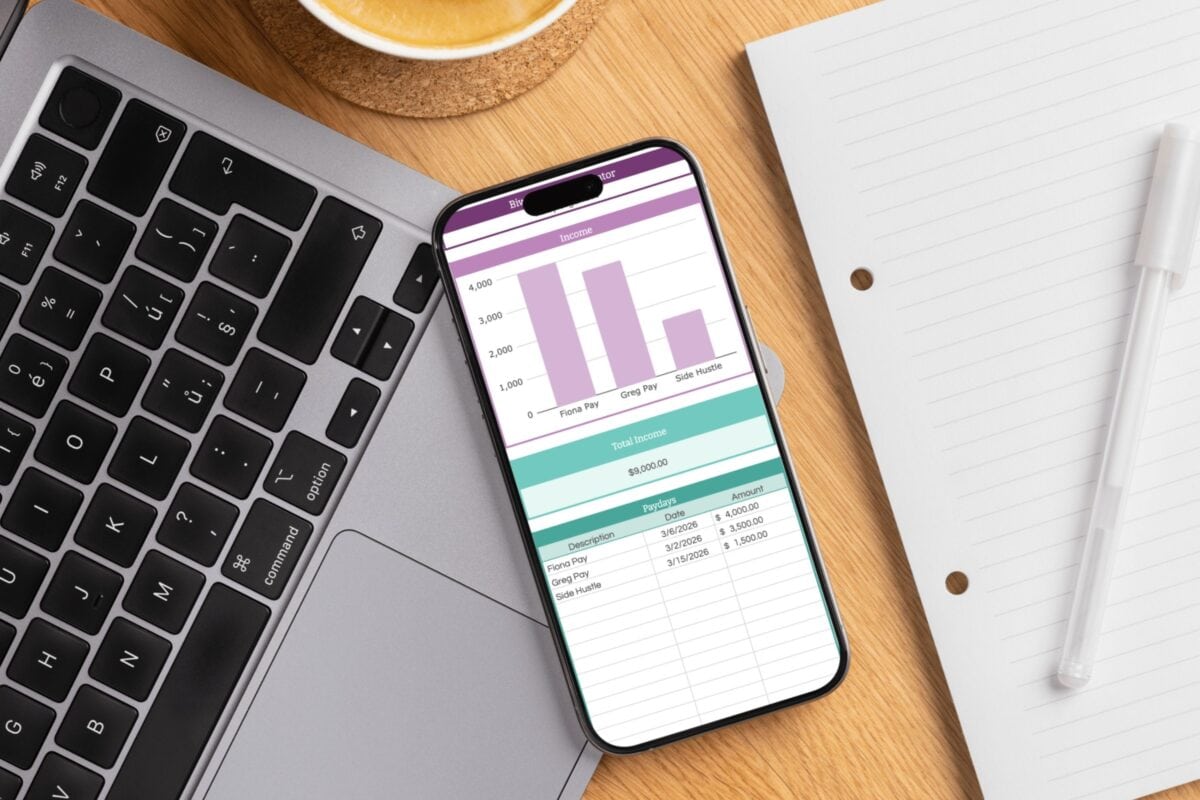
If you’re not sure of the net income amount you have available from each paycheck, pin down that number so you know exactly how much money you have to work with.
If you share expenses with a spouse or partner or have side hustle income, include those funds in your total as well.
Step 2- Do an inventory of your bills and debts.
Pull up your bank/credit card statements from the previous month. Use them to make a list of any recurring bills or debt payments you make every month.
Some examples of bills and debt payments could be…
- utility bills (water, electric, gas, sewer, internet, cable, phone, etc.)
- subscriptions
- membership fees
- car payments
- student loans
- credit card payments
- mortgage or rent
- insurance
Be sure to note the name of the bill, its due date, and the amount due.
If a payment varies slightly from month to month (like a water or electric bill), I like to use a ballpark amount that is slightly on the higher end of what I usually pay. It’s always nice to have leftover funds at the end of the month. But it’s not so fun to be short on cash!
After you’ve created your list, you’ll want to look at how your bills are distributed throughout the month.
Ideally, you’ll want your bills from the first half of the month to have a similar total to the bills you pay during the second half of the month. This will help you make sure you have enough money to pay your bills and cover variable expenses like groceries, gas for your car, clothing, entertainment, etc.
If you find that you spend more on bills in the first half of the month than the second half (or vice versa), don’t be afraid to contact your service providers to request a change in due date. They are typically very accommodating with these types of requests.
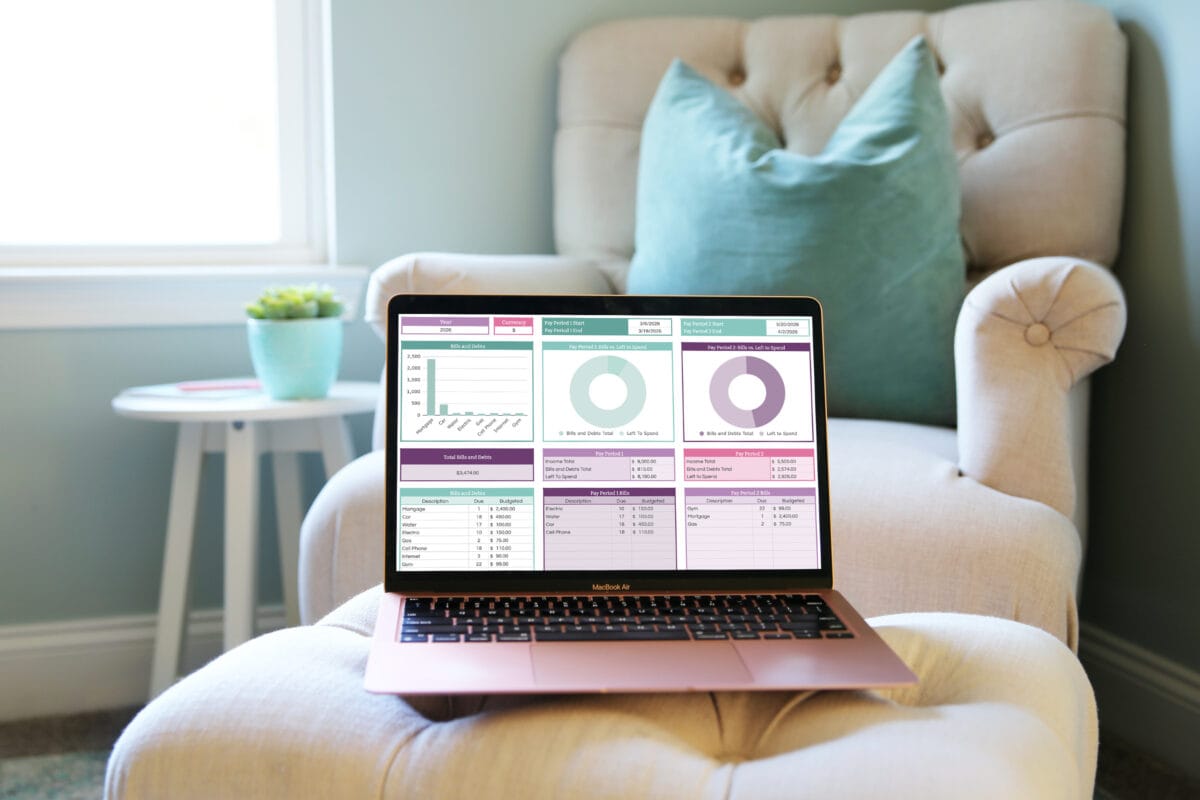
Use the free Biweekly Paycheck Bills Calculator to help!
It can be tricky to figure out which bills are going to come out of which paycheck, so I created a free little tool that will do the math for you!
With the free Biweekly Paycheck Bills Calculator, you enter your income and bill/debt information, select the dates of your pay periods, and the spreadsheet will automatically show you which bills are going to come out of which paycheck.
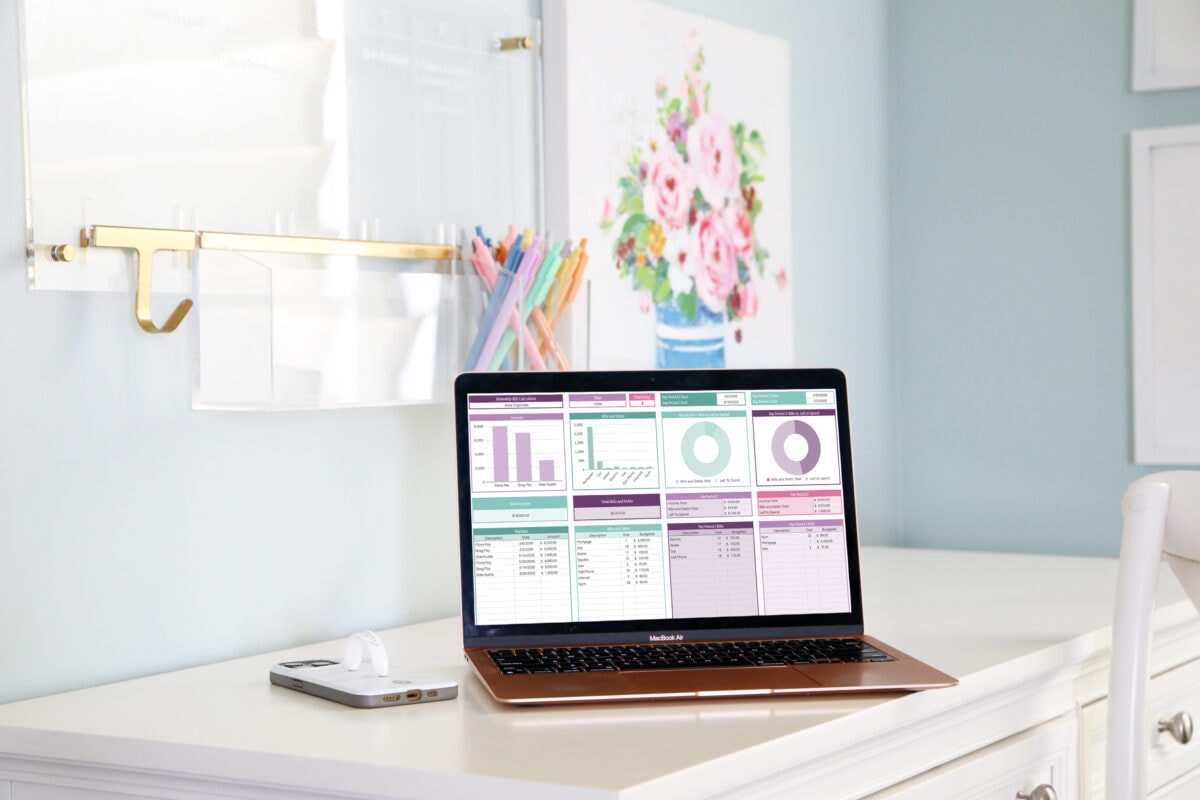
It adds up the totals of the bills and lets you know how much you’ll have left to spend from your paycheck once the bills have been taken out.
You can easily adjust the dates to see what any pay period will look like throughout the year.
If you could use some help figuring out the best way to organize your bills, drop your info below and I’ll send access to the calculator straight to your inbox.
Step 3- Make a list of your variable expenses.
Once you have your bills evenly distributed throughout the month, you’ll want to make a list of your variable expense categories.
Some examples of variable expenses could be…
- groceries
- eating out
- household expenses
- gas/car
- clothing
- kids’ activities
- gifts
- charitable giving
- fun money
If you know about how much you spend in each of these categories, you can write down a budget amount right away. But if you’re not quite sure, that’s okay too!
If you’re just getting started with budgeting, you can simply track your spending for the first month to get a ballpark estimate of how much you spend in each of your variable expenses categories. Then you can give yourself a set budgeted amount for month two.

Step 4- Note savings contributions.
While we’re accounting for all of the money we’re going to spend throughout the month, we’ll also want to note any contributions that we plan to make to savings so those amounts get factored into our budget.
Savings categories can be things like…
- emergency fund
- buffer fund (We’ll talk about this one more in a minute.)
- holiday fund
- vacation fund
- home/car repair fund
- retirement/investments
Creating a Buffer Fund
People who earn biweekly paychecks can often benefit from creating a buffer fund. This is a small savings account that holds additional funds that you can use in case your paydays fall at a weird time in your bill pay schedule and you need a little extra cash to tide you over.
Ideally, you would replace the cash you borrowed from your buffer fund once you receive your next paycheck or as soon as you are able. The exact amount of money kept in a buffer fund will vary based on your household’s needs and expenses.
Your goal will be to be able to pay for your variable expenses and your savings contributions with the “left to spend” amount you have once your bills are deducted from your paycheck.
If your bills/debts + variable expenses + savings contributions total more than your income, you will want to find some places to cut back or pick up a side hustle to generate more income so you’re not sinking into debt each month.
Step 5- Track your spending.
The best way to figure out if you’re meeting your budget goals is to track your spending.
I typically take about 20 minutes on Friday mornings to enter our family’s transactions into our budget spreadsheet. The spreadsheet does the math for me and lets me know if we’re on track.
Since I’m looking at the numbers each week, we can make adjustments throughout the month in order to stay under our budgeted amounts.

But what do I do with that third paycheck?
Oh, I’m so glad you asked! This is the fun part!
If you chose to follow the strategy I mentioned earlier in the post where you base your monthly budget on two paychecks’ worth of funds, you will have two months per year where you have an entire extra paycheck to spend!
This is a great opportunity to…
- put a big chunk of money toward your debt
- beef up your emergency fund
- save for a big future expense like a vacation or new car
- work toward maximizing your investment contributions
- or make progress toward other money goals
My husband Donnie and I have a ranked list of money goals that we’re shooting for, so when we have a surplus of cash, we consult the list and contribute toward the next goal in line.
Having a plan in advance removes the guesswork and indecision and helps us to make smarter money moves.

Final Thoughts: How to Budget with a Biweekly Paycheck
Creating a budget when you are paid biweekly doesn’t have to be overwhelming or stressful! Using the simple tools and easy process mentioned in this post will help you set up a budget that works well for your household.
From there, simply spend about 20 minutes per week tracking your expenses so you can keep tabs on where your money is going.
I’m always amazed at how the simple act of paying attention to our finances helps us to naturally spend smarter and save more, without having to cut out all of the fun stuff!
I can’t wait to see how you boost your finances when you put a smart budgeting system in place.

Budgeting with Biweekly Paychecks: Frequently Asked Questions
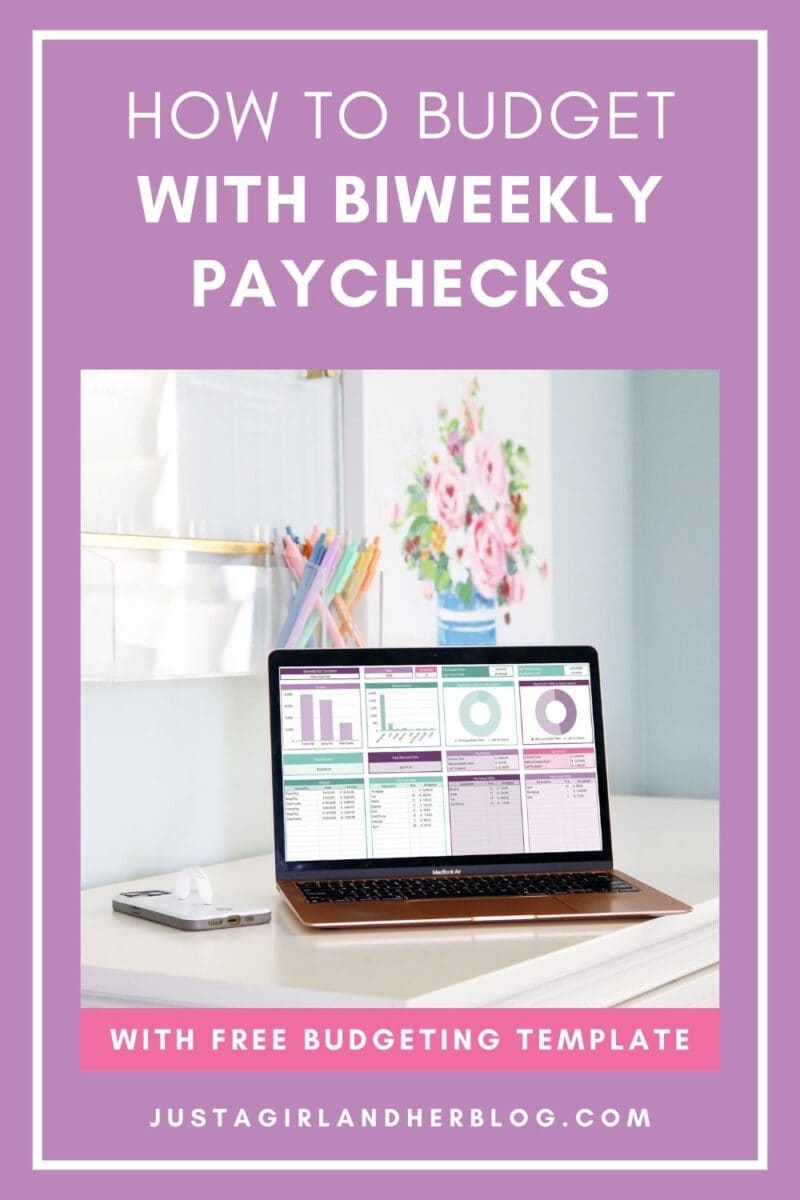
Want to save this post to revisit later? Be sure to pin the image below so you can find it easily!
More Posts About Organizing Your Finances
Thank you so much for following along! Have a wonderful day!